

From Peonies to Pythons: MBGNA’s Public Mission Comes Alive During Summer
This article is part of a series exploring cultural collections at the University of Michigan, particularly their role in teaching and civic engagement. Read previous entries about the Clements Library and the U-M Museum of Art.
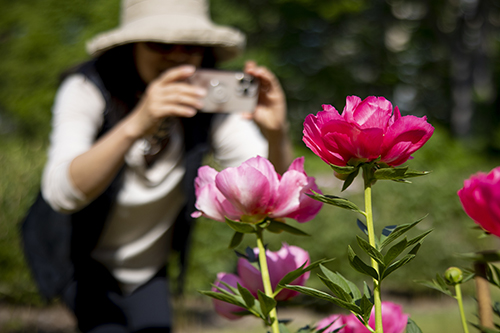
Photo by Marc-Gregor Campredon, Office of University Development
As visitors to Nichols Arboretum often discover, the peony is known for making a lasting impression — with a name taken from Greek mythology, roots and seeds used as a cure-all in medieval Europe, and a kingly status in Chinese culture dating back thousands of years.
It is apt that peonies are a major attraction at Matthaei Botanical Gardens and Nichols Arboretum, where drawing out the history, cultural significance, and future of the natural world is a top priority. The W.E. Upjohn Peony Garden is one of the features now attracting more than 600,000 combined visitors each year; another is the third annual Snake Week, a free and public event July 12-18 offering live reptile encounters in partnership with the U-M Museum of Zoology, expert-led nature walks, and 3D-printed replica specimens to celebrate the biodiversity of Michigan’s ecosystems.
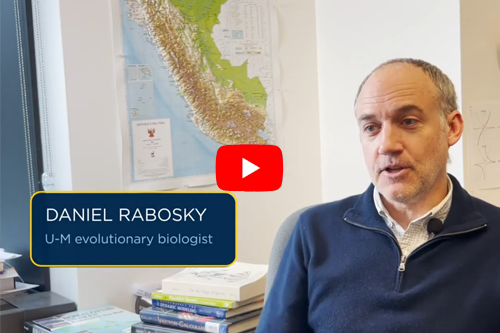
Watch the “Snakes Do It Faster, Better” video on YouTube
A Natural Progression
The gardens and other spaces at MBGNA are familiar to many in Ann Arbor as settings to enjoy nature or clear the mind. But in recent years, its more than 840 acres have been evolving as a catalyst for public education and civic engagement. Just last month, U-M’s Nature Rx program, a multidisciplinary initiative promoting the physical and mental benefits of interacting with nature, guided sessions among the Arb’s peony blooms for students, faculty, and staff. The fresh air acted as a complement to other health and wellness services offered by University Human Resources.
The drive toward new, more visible methods of experiential learning has led to unexpected partnerships. While MBGNA has traditionally collaborated with departments like biology and environmental sciences, projects are now branching further into the arts, humanities, and engineering.
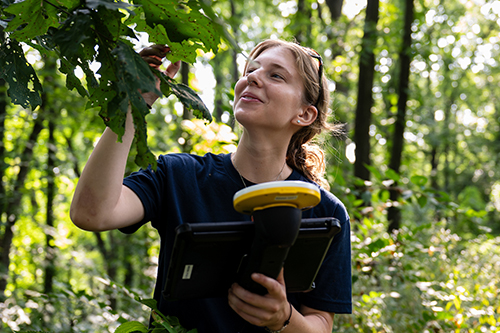
Photo courtesy of Matthaei Botanical Gardens and Nichols Arboretum
“There’s only so much depth that can occur in a classroom,” said MBGNA Director Anthony Kolenic. “When there’s consequences, when it’s public, when you’re holding yourself accountable not just to a professor, but to the community where you live as part of your academic experience, it’s a very different level of engagement.”
“It forces someone to take a theoretical idea and really consider its practical applications.”
In the case of a recent upper-level creative writing and Afroamerican and African Studies course, students examined the historical relationships between Black poets and nature, curated a selection of powerful poems, and worked with staff to design and install large, interpretive signs. The result was “Earth Song,” a poetry hike winding through the Arb, turning a classroom assignment into a tactile, cultural journey for thousands of visitors.
Meanwhile, engineering and architecture programs are approaching MBGNA as a living laboratory for sustainable technology. Faculty and students have introduced real-time research projects into the main conservatory, which hosted a record 185,000 visitors in the last calendar year. By placing bioreactors and structural material studies in such a public, high-traffic area, U-M is able to demystify science and offer a clear view of innovations the region is supporting with tax and tuition dollars.
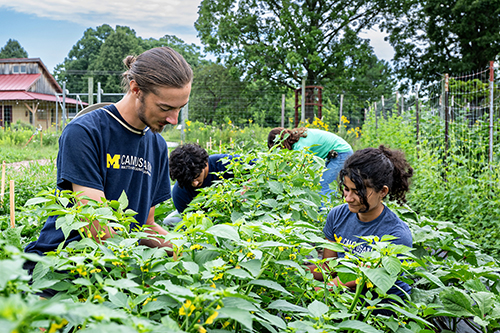
Photo courtesy of Matthaei Botanical Gardens and Nichols Arboretum
Hands in the Soil
Off-campus efforts are reflecting that philosophy as much as academic and curricular partnerships. Each February and March, MBGNA’s Campus Farm grows roughly 60,000 plants destined for food justice organizations in Detroit and Ypsilanti. In addition, the farm provides those groups with student interns, who learn the theory behind urban agriculture while digging into the soil alongside the people putting it into practice.
The U-M Board of Regents also holds a first-of-its-kind, rolling agreement with the Michigan Anishinaabe Cultural Preservation and Repatriation Alliance, facilitating the transfer of Indigenous heritage seeds — housed in U-M’s Museum of Anthropological Archaeology — to Tribal communities across the state. Through a creative application of standard museum practice, seeds enter the ground as university property and emerge as community property: multiplied, revitalized, and returned.
“Its implications are kind of beautiful,” Kolenic said of the pact, which is now in its fourth year and demonstrates how a research university can relate to the original caretakers of its collections. “Instead of 80 older seeds, they get 500 or 5,000 much more viable seeds that help recover and protect their food base and cultural autonomy.”
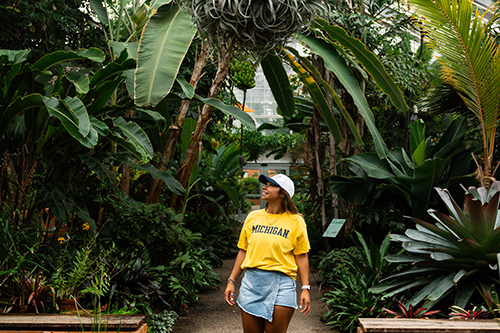
Photo courtesy of Matthaei Botanical Gardens and Nichols Arboretum
Through the process of seed rematriation or events like Snake Week, a basic message illustrates MBGNA’s relationship with the public: signs throughout its facilities emphasize that the space is “always free, all are welcome.” By anchoring world-class research and academic excellence in accessible parks and natural spaces, U-M is doing its part to transform human well-being.
“We have a microcosm of all of life happening on our grounds. I’ve seen proposals, breakups, grief, joy,” said Kolenic. “We belong to the community. This is all theirs to enjoy.”
Snake Week runs from July 12–18 at Matthaei Botanical Gardens and Nichols Arboretum. The event features family-friendly educational activities, expert-led nature walks, and opportunities to connect with U-M researchers. All are free and open to the public.
| MORE INFORMATION |