

Catching Up: Disability Scholarship Initiative
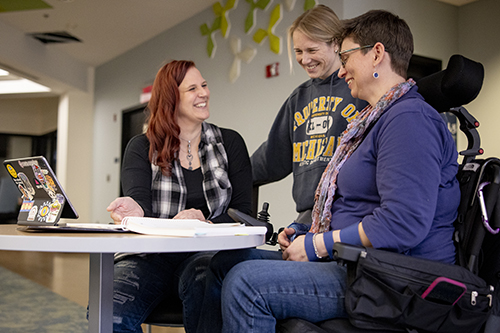
Photo courtesy of Marc-Gregor Campredon, Office of University Development
Since its launch in early 2025, the Office of the Provost’s Disability Scholarship Initiative has supported the pursuit of new scholarship aimed at better understanding and addressing the concerns of faculty and staff on the Ann Arbor campus who have a disability. A broad definition of disability is foundational to the initiative, which may include mental, physical, and cognitive differences.
The six teams awarded funding through the project are taking a uniquely collaborative and synergistic approach to their ongoing research efforts. Here, we follow up with Dr. Michael McKee, professor of family medicine, physical medicine and rehabilitation, director of MDisability, and associate director of the Center for Disability Health and Wellness.
McKee is principal investigator for Michigan Medicine Workplace Equity for Individuals with Disabilities, one of the Catalyst Programs to receive funding. The program is a multi-phase project to identify workplace sources of ableism and pilot interventions to cultivate an anti-ableism workplace culture for Michigan Medicine faculty and staff with disabilities.
Phase one includes a comprehensive needs assessment surveying all 29 Michigan Medicine departments to gather data on the experiences of faculty and staff members with disabilities. This will be followed by focus groups to both explain survey findings and provide deeper insights into barriers and challenges faced by individuals with disabilities at Michigan Medicine. Phase two will focus on an anti-ableism work culture by offering resources including a resource page, a workshop, and a mentor-mentee match.
Where does your project stand in its overall timeline?
Dr. McKee: The Michigan Medicine Workplace Equity for Individuals with Disabilities project continues to successfully move through its planned phase one milestones. Survey dissemination began in November across Michigan Medicine’s 29 Basic Science and Clinical Departments and will continue through the end of February. We have had a phenomenal response to the survey. As of Jan. 21, we have received 175 completed surveys toward our goal of 300. Among those respondents, 83 expressed interest in participating in a follow-up focus group or one-on-one interview.
Our goal is to hold a follow-up focus group or one-on-one interview sessions with 30 participants. Scheduling focus group and one-on-one sessions is underway, with the first focus group session held on Jan. 23, as well as continuing survey dissemination throughout Michigan Medicine ambulatory clinic units. We have also begun developing disability related resources for MM employees.
You previously touched on the value of collaboration among the six research teams. What illustrates this dynamic?
Dr. McKee: The DSI awardees’ monthly meetings were a helpful touchstone for getting the project started and sharing project progress, ideas, and suggestions for things like survey dissemination. So far, we’ve found there is an opportunity to improve the process for Michigan Medicine employees to request accommodations, as well as the need to provide and identify where to find available resources.
Where do you expect the project to be at the end of Winter term? What milestones do you expect to reach?
Dr. McKee: We anticipate completing our data analysis and finalizing the development of disability resources, including targeted support and information to help employees thrive in the workplace. We also anticipate having begun planning for phase two key milestones, which include preparing for the implementation of an anti-ableism workshop tailored to the diverse environments within Michigan Medicine, as well as establishing a mentor-mentee program that matches individuals based on disability and professional background.
| MORE INFORMATION |