

Q&A With John Vasquez, Assistant Vice Provost for Student Success
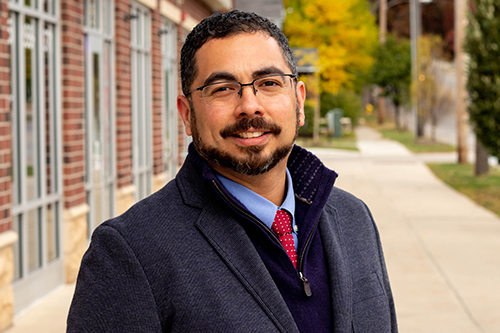
John Vasquez is assistant vice provost for student success and senior director of the Comprehensive Studies Program (CSP), housed in the College of Literature, Science, and the Arts. In these roles, which he began in August 2025, he provides strategic leadership to advance academic excellence, develop high-impact student success initiatives, and foster cross-campus partnerships aligned with CSP’s mission.
As a two-time University of Michigan alumnus and former CSP student, he brings more than 25 years of experience in academic leadership, research, and student support, including work across rural, urban, and flagship institutions.
Q: What excites you most about the work you’ve done in your role thus far?
JV: The work I’ve done so far feels deeply personal, coming full circle to serve the very community and program that shaped who I am, exactly 30 years ago, when I started as a student. As a CSP alum, I remember what it felt like to be both hopeful and full of possibility, and I carry those experiences with me every day in this work.
Returning in this role, I’m constantly energized by the opportunity to work alongside faculty, staff, and students who lead with purpose and care. I’m excited about getting to work with people who embody the same relentless support that I benefited from three decades ago, and I get to be part of a community that isn’t content with “good enough.” We’re always asking, “How are we supporting the needs of our students?”
I’m a research-practitioner at heart, and therefore excited about taking complex institutional challenges, like financial barriers, siloed student support, or outdated policies, and working alongside others to translate insights from data into strategies that help students thrive. I’m especially energized by those moments when we’re able to reimagine what’s possible, like redesigning practices so students, especially first-generation, low-income and marginalized students, don’t just gain access, but feel a sense of belonging and purpose throughout their journeys.
At the heart of it, I’m most excited by the ongoing question: Are we actually moving the needle for students, especially those our systems haven’t served well in the past? Leading with clarity, care, and curiosity, I get to help turn that question into meaningful progress every day. That sense of possibility, and the privilege of witnessing students and teams grow, overcome barriers, and ultimately succeed, continues to inspire and energize me in this work.
Q: This year marks the 50th anniversary of the Summer Bridge Scholars Program. What would you say are its biggest achievements, and what are its greatest opportunities moving forward?
JV: This year’s 50th anniversary of the Summer Bridge Scholars Program is not only a celebration of longevity, but also a testament to Bridge’s deep and lasting impact on our campus community. As a CSP alum, I have seen firsthand the transformational power of programs that foreground belonging and support. But what makes this year especially meaningful is the opportunity to shine a light on both the lived experiences and the research that shows just how meaningful Summer Bridge has been for generations of Wolverines.
One of the program’s most significant achievements is its consistent creation of a foundation of confidence, community, and navigational capital to help students not only get to college, but thrive throughout their Michigan journey and beyond.
Dr. Janella Benson, a Bridge alum, has dedicated her scholarship to researching the long-term impact of programs like Summer Bridge. Her recent study shows what many of us have experienced firsthand: Bridge doesn’t just help students transition academically; it builds essential networks, instills confidence, and provides the “hidden curriculum” needed to navigate a large and complex institution. The mentoring and support students receive ripple well beyond graduation, contributing to college persistence and inspiring many alumni, as Dr. Benson notes, to “lift as they climb” and create a legacy of support for future generations.
What excites me most about this milestone year is our focus on learning directly from the Bridge experience by engaging with Dr. Benson’s research and centering alumni voices. By highlighting stories from alumni across generations and examining how Bridge shaped their lives, we’re honoring 50 years in the most meaningful way: through the lived wisdom of Bridge scholars.
Looking ahead, our most significant opportunity is to build on this legacy by using these insights and research to shape even more transformative support for future students, ensuring that the program’s impact continues to deepen for years to come.
Q: Student success and retention are fast-moving targets. What are some of the most important factors for supporting students today, compared to recent years?
JV: Supporting students today means taking an even more holistic approach: one that recognizes students as whole people who bring complex identities, lived experiences, and intersecting challenges to campus. A key shift has been the move toward integrated, wraparound support models. Instead of compartmentalized services, effective approaches now focus on proactively connecting academic advising, mental health resources, financial aid, and co-curricular engagement. CSP currently has this model and this integration helps ensure that students don’t have to navigate institutional silos, and allows us to respond more quickly and thoughtfully to their needs.
Validation theory is also central to our work. As the Student Academic Success Team underscores, when students feel seen, heard, and valued by faculty and staff, their sense of belonging and academic motivation increases. Today, successful advising means dispensing information, but also intentionally affirming students’ backgrounds, capabilities, and aspirations. It’s about fostering trust, co-creating plans, and providing regular, personalized check-ins moving from a transactional model to a relational one.
Q: Given your personal experience in CSP, how should U-M be reaching and engaging with prospective students?
JV: I believe U-M should reach students by meeting them where they are, both literally and figuratively. That means forging authentic partnerships with local schools and community organizations, offering accessible and culturally relevant information, and ensuring our outreach efforts reflect the lived experiences of the students we hope to serve.
It’s also important to highlight the stories and support networks that CSP and similar programs provide. When prospective students hear directly from current scholars and alumni — people like me who have also navigated U-M and found community, mentorship, and success — it makes college feel more attainable and welcoming.
Additionally, we should provide clear pathways to connect with resources early, such as campus visits, summer bridge programs, and family-inclusive outreach. Active listening sessions, and advisors who can help demystify the application process, are important in validating students’ ambitions and concerns from the start.
Ultimately, the best engagement is rooted in relationship-building, sustained contact, and a consistent message: You belong here, and we have a community ready to support you!
Q: As an undergraduate student, you collaborated with faculty on research. How do all U-M faculty and staff play a role in student success?
JV: My own experience collaborating with faculty on research as an undergraduate was transformative. It made me feel seen, capable, and truly part of the academic community. I firmly believe that all U-M faculty and staff play a vital role in student success by engaging students beyond the classroom. When faculty welcome students into research, mentorship, and co-curricular projects, they help demystify the university experience and validate students’ belonging and potential.
As I mentioned earlier, holistic support is critical: when faculty and staff proactively connect students to advising, mental health, financial aid, and engagement opportunities, they help break down institutional barriers and foster an environment where students feel they truly belong. Every interaction, from a professor’s encouragement to a staff member’s guidance, is an opportunity to empower students, affirm their strengths, and support their growth.
Q: What’s your favorite place to eat in Ann Arbor?
JV: I love eating at Totoro’s! It’s my favorite sushi place near campus.