

Michigan Impact Professorships Awarded as Part of Look to Michigan Faculty Expansion Program
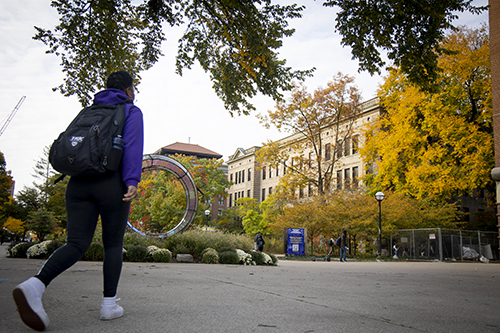
Six University of Michigan faculty hired under the Faculty Expansion Program (FEP) have been appointed Michigan Impact Professors. The FEP was designed to recruit colleagues with exceptional potential to expand the capacity for transformative inquiry in high-impact areas of research, scholarship, and societal challenge.
As part of the program, selected faculty also receive the designation of Michigan Impact Professor for a five-year, nonrenewable term. The Michigan Impact Professorships were established to help attract outstanding mid-career faculty whose research contributes to U-M’s capacity for interdisciplinary leadership and innovation, consistent with the Look to Michigan areas of impact:
- Life-Changing Education
- Human Health and Well-Being
- Democracy, Civic & Global Engagement
- Energy, Climate Action, Sustainability and Environmental Equity
- Advanced Technology
At its October meeting, the Board of Regents approved the appointment of the following U-M faculty members to a Michigan Impact Professorship:
Kathleen Creel
Associate Professor of Philosophy
Associate Professor of Weinberg Institute for Cognitive Science
College of Literature, Science and the Arts
Impact Area: Advanced Technology
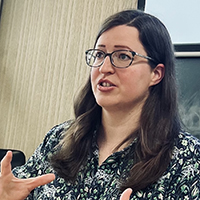 Machine learning systems make autonomous decisions at scale, screening millions of resumes, rejecting applicants before a human eye sees their files, and finding novel patterns in scientific data too large for a human to process. These powerful mathematical tools promise to expand human cognitive capacities, but their opacity makes it difficult to determine when trust in their predictions is warranted. Working at the intersection of ethics, epistemology, and machine learning itself, Creel’s work examines how automated systems generate new social and scientific categories and when they should—or shouldn’t—be trusted to do so.
Kyle C. Hartig
Associate Professor of Nuclear Engineering and Radiological Sciences
College of Engineering
Impact Area: Advanced Technology
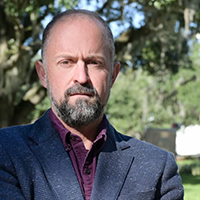 Hartig’s research focuses on the development of advanced sensing, diagnostic, and analytical methods for nuclear forensics, proliferation detection, nuclear detonation characterization, space-based nuclear detection, and national-security applications. His technical expertise spans remote sensing, radiation detection, laser-based diagnostics, machine learning, nuclear nonproliferation and counterproliferation, nuclear forensics, and nuclear policy.
Julie Segre
Professor of Microbiology and Immunology
Life Sciences Institute Director
Michigan Medicine
Impact Area: Human Health & Well-Being
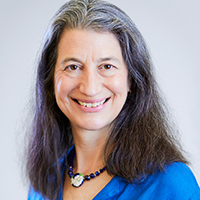 Over more than 25 years at the NIH, Segre established herself as a prominent leader in microbial genomics, human microbiome research, and antimicrobial resistance. By combining computational expertise with a strong commitment to collaboration, she became a trusted voice at the intersection of scientific research, clinical practice, and public policy. Segre’s laboratory utilized high-throughput sequencing and developed algorithms to study the microbial diversity of human skin in both health and disease states, with a focus on eczema and other microbial-associated infections.
Vidya Setlur
Associate Professor of Information
School of Information
Impact Area: Advanced Technology
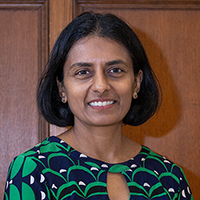
Setlur directs the Data Semantics Lab at the School of Information. Her research explores the intersection of data visualization, natural language processing, human-computer interaction, and AI, with a focus on how people interact with data, express analytical intent, navigate ambiguity, and make sense of intelligent systems. Prior to joining U-M, she led the research team at Tableau / Salesforce and continues to maintain a limited research affiliation with Tableau Research.
Anjali Sharma
Associate Professor of Pharmaceutical Sciences
College of Pharmacy
Impact Areas: Human Health & Well-Being; Advanced Technology
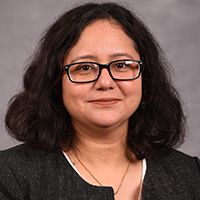 Prior to joining U-M in 2026, Sharma was an assistant professor in the department of chemistry at Washington State University, where she founded and directed the Translational Nanomedicine Research Laboratory. She earned her Ph.D. in materials chemistry from McGill University and completed her postdoctoral training in translational nanomedicine at the Center for Nanomedicine, Johns Hopkins University School of Medicine. Her research program integrates chemistry, materials science, nanotechnology, engineering, and medicine to develop clinically translatable, target-specific nanotherapeutics for drug delivery, gene delivery, and molecular imaging.
Tiantian Yang
Associate Professor of Environment and Sustainability
School for Environment and Sustainability
Impact Area: Energy, Climate Action, Sustainability and Environmental Equity
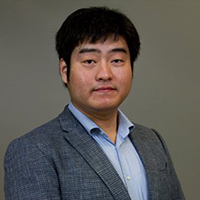 Yang’s research explores how we can better understand, predict, and manage water in a rapidly changing world. His work sits at the intersection of hydrology, water resources engineering, climate science, and artificial intelligence, focusing on how weather extremes, climate change, subseasonal-to-seasonal precipitation forecasts, and human decisions influence the sustainability and resilience of hydrologic and surface water systems. These systems include rivers, streams, lakes, ponds, reservoirs, and dams that support essential services such as drinking water supply, flood protection, agriculture, clean energy production through hydropower, and ecosystem services.
For more information, including application criteria, process, and recent years of activity, visit the Faculty Expansion Program on the Office of the Provost website.