

In Their Own Words: Faculty Perspectives on Pluralism in Teaching
Faculty across our campus bring a wide array of tools, techniques, and assignments to the project of promoting dialogue and critical thinking in the classroom every day. Below, faculty members share perspectives and methods of promoting civil discourse, addressing controversial topics, and engaging in productive discussion in fields from religious studies to law.
Rebecca Wollenberg
Associate Professor of Judaic Studies
Frankel Center for Judaic Studies
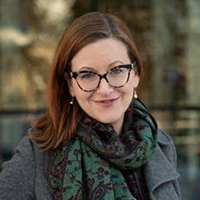
I believe dialogue across difference is best taught using play with purpose. Through play, we can bypass our threat response and break out of inherited scripts to see creative new angles on contentious issues. Sometimes this is best achieved through formal scaffolded dialogue games, like the Pluralism Playdeck I developed with Sangseraima Ujeed. Sitting around that cheerful rainbow card deck, eating donuts provided by the Wallenberg Institute, students from across the university are suddenly willing to spill their guts to strangers on questions of gender, religion, ethnicity, and socio-economic status — topics many have never spoken about before outside the structures of the classroom.
But play comes in many forms. Done in the proper spirit, almost any learning activity can become a game. When students work with my Pluralism Workbook, an illustrated guided journal created to teach the communication skills student need for difficult conversations, many break out colored markers and doodle as they complete the exercises — turning a required self-improvement assignment into a pause for self-care, reflection, and creativity. While in the Abrahamic Sensorium series, Yasmin Moll and I brought Jewish, Christian, and Muslim students together in dialogue over playful moments of sensory pedagogy—like a hair covering workshop where an expert in traditional veiling practices dressed participants in historical hair coverings from Jewish and Christian tradition. Through this playful evening of scholarly dress up, students became comfortable with diverse concepts and embodied sensations of hair covering so the contemporary practice of hijab could be engaged with in new ways.
Most importantly of all, perhaps, dialogue education through play acts as an antidote to the pressures and darkness of the times. At a moment when we are all stressed by how best to speak to each other about important issues on which we do not agree, there is nothing more cheering for worried faculty than watching a naturally lively listener from the upper administration try not to laugh as she attempts to role play the quiet listening nod of the Midwestern student in a play-based CRLT workshop on dialogue pedagogy.
Mika LaVaque-Manty
Arthur F. Thurnau Professor
Associate Professor of Political Science
Associate Professor of Philosophy
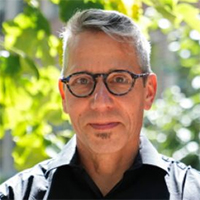 In political science, the material we teach is the very thing that so often divides us. Instructors face two challenges. The more obvious one is how to teach the material fairly, not privileging any particular view or, worse, presupposing that “Of course we all agree.” We know that even at a place like the U-M, where political orientations skew center-left, a wide range of views exist among students, faculty, and staff. Not everyone at Michigan is a “liberal.” Not all “liberals” agree.
I’ve never found this challenge particularly hard. The fundamental disposition of a scholar is the idea that I might be wrong. So in my courses, where we cover a large range of political ideologies, I try to model the principle of charity: Smart people in the past and present have found these ideas worthwhile, so let’s give them a fair hearing. I try to model this by making the strongest case for any given position, and in interactions adopt the role of a constructive opponent to whatever position a student takes.
But a second challenge is harder. How do we show students that you can do this — appreciate plural perspectives, engage in dispassionate inquiry — and not become a valueless cynic? I frequently work with students who write their own research theses in political science. It is admirable that students pursue questions they feel passionate about, but it is also important that they recognize that even inquiry driven by political or moral values is not, in the first instance, about pushing a particular view. We call such an approach “conclusion-driven research.” Scholarship is about understanding the world. And that is how I try to explain to the students the division of labor between being an activist and a scholar: you can change the world (if you want to) only if you understand how it works.
It is not the only possible way of being a social scientist. Indeed, it explicitly reverses Karl Marx’s famous claim that the job of scholars (Marx talked about philosophers) is to change the world. So on that score, too, I admit to students, I may be wrong.
Jenna Bednar
Faculty Director, Initiative for Democracy and Civic Empowerment
Professor of Public Policy, Ford School of Public Policy
Professor of Political Science, College of Literature, Science, and the Arts
 As part of my administrative work on campus democracy, I’ve come to appreciate how much democracy depends on norms like respect for equality before the law and the integrity of elections. Policy choices can always be reversed, but when these norms fail, democracy itself is at risk. Unlike written laws, democratic norms require citizens to work together across disagreement, which means learning to respect the participation and perspectives of people with whom we disagree. I increasingly see undergraduate education as a crucial opportunity not only to develop professional skills, but also to help students practice the habits of constructive dialogue that democratic life requires.
One challenge, however, is that many students self-censor in classroom discussions, particularly when they perceive their views to be in the minority. I saw this dynamic in my own teaching and in administrative work. In earlier versions of my courses, I tried to address this by requiring students to conduct stakeholder analyses that included groups opposed to their preferred policies. But students often treated opposing stakeholders mainly as obstacles to overcome rather than people whose perspectives deserved genuine understanding. It is so hard to see the human through the noise of policy difference.
I redesigned the course around a sequence of policy-writing assignments culminating in a substantial policy brief. The most important innovation involved an existing op-ed assignment. I asked students to write the op-ed from the perspective of someone opposed to the policy recommendation they planned to advance in their final brief. The goal was to push students to inhabit the perspective of a stakeholder who might feel harmed, threatened, or overlooked by their proposal — not simply to rebut that perspective academically, but to understand it as a human experience. I then required students to cite and engage with their own op-ed in the final policy brief, forcing them to grapple seriously with a compelling argument against their preferred policy.
The results were striking. Students became noticeably more comfortable discussing disagreement in the classroom, and conversations about policy differences across states became more open and constructive. Even more surprising, many students reported in office hours that the exercise had changed how they thought about their own proposals. Some moderated their recommendations in search of compromise, while a few reconsidered their positions entirely and asked to change their final policy recommendations to align with the perspective they had explored in the op-ed. Overall, the assignment proved to be a highly effective way to encourage empathy, intellectual openness, and more thoughtful democratic engagement, and it is an exercise I plan to continue using in future courses.