

Five Questions For: Sandra Levitsky, the Sexual Citizenship Project
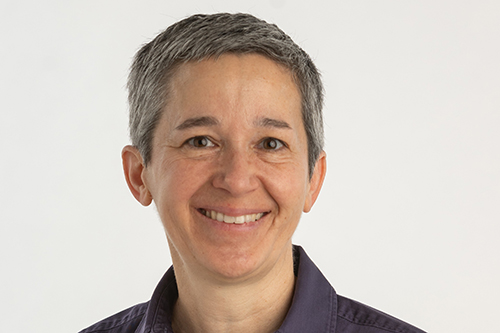
Sandra Levitsky is an Arthur F. Thurnau Professor & Associate Professor of Sociology and one of the co-investigators of the Sexual Citizenship Project. The project’s other co-investigators include Lisa Fedina, associate professor of social work; Michelle Munro-Kramer, associate professor of nursing; Abigail Eiler, clinical associate professor of social work; and Richard Tolman, Sheldon D. Rose Collegiate Professor of Social Work.
The Sexual Citizenship Project is a University of Michigan-Ann Arbor initiative designed to examine how universities can better prevent sexual misconduct. The project, which includes students’ participation in a longitudinal research study (HUM00270529), involves a half-semester (7-week) mini-course during their first year of college. The research component is designed to assess whether there is any effect of the course on students’ sexual experiences and experiences of sexual misconduct during their time at Michigan.
What is the Sexual Citizenship Project?
The Sexual Citizenship Project responds to the persistent problem of campus sexual assault by treating prevention education as part of our curriculum. The Cornell sexual assault case is horrific, but also painfully familiar: 1 out of 4 women are assaulted by the time they graduate from college. Here at Michigan, we offer some of the best prevention education in the country, including the well-regarded First-Year Relationship and Sexuality Talk (FYRST) program from the Sexual Assault Prevention and Awareness Center, and workshops on consent and bystander intervention. And yet it is clear that we still have a long way to go.
A few years ago, the Coordinated Community Response Team approached the provost about trying something new. We were focused on a study at Columbia University that found how little sex education most students have had before they start college, and what a profound impact high-quality sex education can have on reducing sexual misconduct. Researchers found, for example, that women who had received comprehensive sex education in high school were half as likely to report being raped in college.
Drawing on this research, we made the case to the provost that we should offer prevention education as a class for both men and women, taught by a trained professor, with a syllabus and readings and opportunities to reflect and discuss — and really grapple with the question of why sexual violence remains such a persistent feature of the college experience.
Since there is a paucity of good research on the effects of offering prevention education as part of a class, we made the case that we should roll this class out as part of a controlled experiment: we proposed randomly selecting first-year students to either take the class or participate in the usual U-M programming. We would then survey all students each semester until they graduated about their experiences relating to sex and sexual violence. And we can measure: does the class make a difference?
What is “sexual citizenship” and how is it different from “consent”?
Consent is narrowly focused on yes / no permission for a specific act; the concept of sexual citizenship is much broader. Sexual citizenship refers to the idea that all people have the right to choose their sexual experiences, and that others possess the exact same right. It is focused on rights to bodily integrity, sexual health and pleasure, mutual respect, and an understanding of what sex is meant to achieve, all while appreciating that other people have rights to these same things.
What does the Sexual Citizenship class cover?
The Sexual Citizenship class (SOC 223/SW 233) is jointly offered by the Sociology Department and the School of Social Work as a 7-week, 2-credit class. The class covers information on biology, sexual health, and healthy relationships, and it talks about how drugs and alcohol affect decision-making around sex. But it also goes deeper, asking students to consider the cultural and structural roots of sexual violence.
For example, how do cultural norms about “hooking up” shape sexual experiences on college campuses? How do things like power and identity shape sexual experiences? Finally, we end the class on an empowering note and ask students to consider how they can play a role in transforming campus culture to create a safe space for all students to learn.
What have you learned so far from the study about whether a class like this might reduce campus sexual assault?
Because we only just completed the first year of the study, it’s too soon to know whether students who take the class experience less sexual harm than students who don’t take the class. But so far we have found that students who took the class score significantly higher than students who haven’t taken the class on things like ability to navigate consent, to articulate personal values and boundaries, and to recognize how power and culture influence relationships.
Our qualitative data from students who took the class also show important effects. Students reported how powerful it was to find a language for describing their feelings and experiences relating to sex, and how they understand more about why people “stay quiet” about sex and sexual misconduct. Students described developing a sense of agency in learning the core concepts of sexual citizenship. And students appreciated how the classroom experience itself (as opposed to an online-training module or a 90-minute workshop) allowed them to really grapple with the complexity of sexual violence.
We are hopeful that in another year or two, we are going to start to observe reductions in sexual harm. If we can document those effects, then we may finally start to move the dial on reducing the prevalence of sexual violence on college campuses.
How can faculty and staff help in this effort to reduce sexual violence?
The challenge of the Sexual Citizenship Project is recruitment. Every first-year student has been invited, repeatedly, by email to join the project. Once they consent to join the study, they are randomly selected to either take the class or join the control group. Both are really important roles.
Students are offered a $300 incentive for completing the class, and $25 for every survey they complete (for up to $500 for students who take the class, and $200 for students in the control group). We offer many sections of the class, and we run the class twice every semester. And it’s a well-regarded class; course evaluations are sky-high, and students have nothing but praise for the instructors. But even with all this flexibility and all these incentives, we still have seats to fill!
For faculty and staff who teach or have regular contact with first-year students, we encourage you to publicize the project. We have staff who can come give a 5-minute pitch to your class on the Sexual Citizenship Project.
Please reach out to our team ([email protected]) to help us connect with your students!