

Five Questions for: Paul Draus, U-M Detroit Center
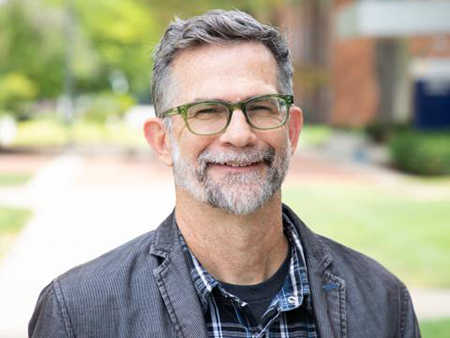
Paul Draus was named faculty director of the University of Michigan’s Detroit Center in 2023. He is a professor of sociology at UM-Dearborn, and has taught classes there since 2005. His leadership roles within the university include director of graduate studies in criminology and criminal justice, and director of the Master of Public Administration program and of the Master of Public Policy program. Long active in community-based teaching and research in metropolitan Detroit, he received the Michigan Campus Compact Community Service-Learning Award in 2014.
The University of Michigan Detroit Center sits in the heart of Detroit’s vibrant cultural district on Woodward Avenue. Established to strengthen the bond between the university and Detroit, the center serves as a hub and hive for service, education, research, and meaningful community and cultural exchange.
1) What are some of the biggest near-term priorities for the Detroit Center? What excites you most?
As we begin our 21st year on Woodward Avenue, we continue striving to be a hub of engagement and a hive of activity, bringing university and community together for purposes of education, inspiration, conversation, and collaboration. Hopefully, all of that also contributes to the transformation of both people and places, as we work toward building the city and society that we all want to live in.
In concrete terms, we are planning a yearlong series of listening and learning circles that will highlight the role of grassroots organizations and leaders in Detroit and the academic workers who are also engaged in the same issues, beginning with immigration and voting rights, and continuing with other topics such as LGBTQ+ rights, housing affordability, and others that our community stakeholders want to see us explore.
This series will be called BLOCK X BLOCK, emphasizing the productive engagement of the BLOCK M with “the block,” or the everyday world of the city, as well as the incremental, “brick by brick” nature of social change that is assembled persistently and deliberately by people of deep commitment.
In addition to this “showcase” series, which builds off last year’s “Workshop of Democracy” panel discussion series with Bridge Detroit, we will continue to offer monthly events that highlight many diverse areas of interest, from arts and culture to politics and business.
2) What does the Detroit Center offer the U-M community that can’t be found elsewhere?
In addition to our original Detroit Center programming, our main function is to provide a space for U-M faculty, students and staff to do their events within the city, and with the community. Because of our location and the networks that connect here, we offer both a central, professional setting for workshops, retreats, performances, or lectures, as well as support in planning and promoting those events.
For faculty who are doing work in Detroit, or who want to be more actively engaged with Detroit communities, the UMDC offers a setting for sharing results of research or works-in-progress, having direct conversations with community members, and collaborating on future projects.
3) Are there upcoming programs or projects for which the center is actively seeking engagement with U-M faculty, staff, or students?
We are always looking for content that we can produce or host here at UMDC. For example, our upcoming announcement of the BLOCK X BLOCK series (discussed earlier) will include an open call for U-M faculty, students and staff to suggest community leaders or organizations who should be featured, or the UM scholars and projects that can be paired with them.
Our monthly “Detroit Practice” series is a mini-lecture or lightning talk format (consider it an “espresso shot” for education or inspiration) that allows either community organizations or U-M faculty, students or staff to share projects at various stages that they are very excited about. Our June session featured veteran reporter Bill McGraw and UM-Dearborn Professor Tim Kiska exploring the complex legacy of Detroit’s first Black Mayor, Coleman Young, with a lively audience of long-term Detroit residents.
Our July Detroit Practice Series speaker will be Diane Cheklich of Detroit Bird Alliance, who will discuss birdwatching in Detroit with all its ecological and sociological implications. In addition, we have regular exhibitions on display on our “Detroit Wall of Art”, which currently displays “Postmarked from the Inside,” a curated collection of greeting cards crafted by people incarcerated in Michigan prisons.
So the range of offerings and possibilities is quite broad, and we are always interested in ideas or suggestions, especially if they expand the zone of meaningful engagement between the city and the university! Our “small but mighty team” is here to help you achieve whatever goals you set for your event.
4) What has been your most meaningful experience since becoming director of the Detroit Center?
As faculty director, I have been honored to work with a fantastic team, including Facilities Coordinator Jame Neely; Associate Director Dr. Lynita Taylor; Associate Project Manager Mia Nimmons; and Administrative Assistant Senior Ronotta Holliday. That includes our part-time employees Lesia Syrowatka and Paul Patterson, as well as our long-time residents such as the Semester in Detroit Program, Poverty Solutions, and Michigan Alzheimer’s Disease Center.
This month, we are also very happy to welcome Kamyla Sykes, our new conference and events program manager. Kam will be working to expand the number of external partners at UMDC and to support all the UM units (faculty, students, and staff) who want to come and do their programs and events with us.
They come together brilliantly to meet the needs of all our users and make every event a success. I have felt supported by Vice Provost of Engaged Learning Valeria Bertacco from the very moment I started in this position, especially as we have sought to expand the possibilities for programming at UMDC.
Most of all, however, I have been humbled by the opportunities I have had, week after week, month after month, to learn from the hard-earned experience of Detroiters who come here and share their time and wisdom with us.
5) What do you wish more people knew about the Detroit Center?
Most of all, I want them to know that this is a social place, not just an institutional space, and that if they are part of the University of Michigan, it is also THEIR place. Sometimes we feel like an outpost of U-M, on the margins of the university in far-off Detroit, but we believe that we are truly at the center of everything.
We would encourage anyone who is interested in becoming involved with the Detroit Center, or simply enjoying a day in Detroit, to check out our monthly newsletter, “Wolverines on Woodward,” and attend some of our events.
I personally invite everyone from U-M to join us in the Sosnick Courtyard on Sunday, July 19 for the Wolverine Outdoor Stage as part of the 2026 Concert of Colors, featuring Detroit-based performers sharing the sounds of jazz, soul, rock, reggae and blues. This year we will also pay homage to the memories of three U-M giants who contributed to both the life of the university and that of Detroit: Ismael Ahmed, Barbara Israel, and Deborah Smith Pollard.
Beyond that, I hope that people will give us feedback, send us inquiries and ideas, and let us (and others) know when we have made a difference. Every little bit counts!
| MORE INFORMATION |