

From the Desk of the Provost: July 2026
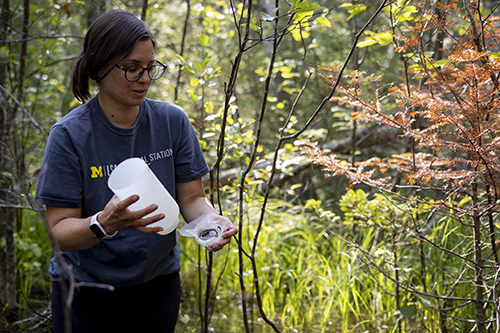
Photo by Marc-Gregor Campredon, Office of University Development
As anyone with recent experience navigating Ann Arbor construction knows, this is not a slow or quiet season on campus. And yet, sometime after the conclusion of spring semester, many of us hear variations on a certain question:
“What are you planning to do with the downtime this summer?”
Considered from an outsider’s perspective, the inquiry seems honest enough; we learn the institutional rhythm of academia from an early age, and the pace of higher education is noticeably different between May and August. But while our lecture halls and laboratories may be less populated, at Michigan, the learning continues in ways that set us apart.
For example, engineering and clinical faculty within our Global Health Design Initiative are guiding immersive experiences at field sites in Ghana. Their interdisciplinary teams are embedded directly in hospitals, learning to listen, observe, and develop deep understanding of how healthcare technologies are best used locally. Earlier this summer, anthropological archaeology faculty in LSA led an international research team and students through the Mat River Valley of Albania. Through exhaustive pedestrian surveys and museum laboratory cataloging, they hope to reconstruct Bronze and Iron Age settlement histories.
Closer to home, faculty at the U-M Biological Station are utilizing the state’s northern wilderness to anchor a slate of field-based courses that spans science, policy, natural history, arts, and cultures across the Great Lakes region. Classes like Microbiology, Field Studies of Freshwater Fishes, and Michigan: People and Place in a Changing Climate allow students to explore more than 10,000 acres of undeveloped land.
Meanwhile, undergraduate scholars in the Michigan Summer Program in Cognition and Early Development are moving beyond psychological theory to work directly with children and families. And graduate student interns with the Center for Global Health Equity are embedding with research teams on a ten-week sprint. Their aim is to address complex healthcare disparities using practical strategies, with mentorship from U-M and international experts.
The General Fund budget for the Ann Arbor campus is an expression of our collective priorities in supporting all of this work, and you may have seen that the budget for fiscal year 2027 was approved by the Board of Regents in late June. Its focus is squarely on protecting our most financially vulnerable students, fueling our academic and research missions, and positioning the university to stay resilient as external conditions continue to evolve.
By late August, our campus will have transformed again with the energy and excitement that a new academic year brings. The seeds of that moment are being planted now, as our students, educators, and researchers live experiences that will inspire their next discovery at U-M.
I hope you are enjoying an outstanding and rewarding summer, and always welcome your feedback and success stories at [email protected].
Regards,
 Laurie